Jeremy Snyder
  • Home
  • Portfolio
  • Shop
  • Contact
  • Blog

Visual
Storytelling

My driving principle:
Science as X-ray vision 

I've long been fascinated by the idea that science can transform how people see. In sharing the mechanisms that underlie everyday life, I hope to help others see the hidden inner workings of their world. Seeing in this way adds wonder and intrigue to even the most familiar subjects, and I aim to harness that feeling to make science communication more engaging and relevant.

I've pursued this idea through many of my visual stories, as well as public talks and projects like the Story of Sand
From Dirt to Digital: The Story of Soil Carbon
StoryMap | January 2025
This piece tells the story of cooperation between field, lab, and modeling work at Berkeley Lab by following a sample of soil carbon from a field sample to a data point in global climate models. This StoryMap was built as a hands-on a teaching experience for training colleagues and interns on visual storytelling. 
Go to the storymap
Power and Promise Beneath the Salton Sea
StoryMap | November 2023
This in-depth educational piece dives into the exciting possibilities of sustainably extracting lithium from geothermal brines in Southern California. This StoryMap and its photos and illustrations were used extensively for outreach by Berkeley Lab scientists and the California Lithium Valley Commission, providing a neutral resource for informed dialogue between local communities and the geothermal companies developing this technology.


Go to the storymap
Tracking Water and Weather in the Rockies
StoryMap | August 2023
This brief vignette follows a day in the fieldwork of Berkeley Lab scientists studying snow in the rockies 


Go to the storymap
Landscapes in Flux
Gallery Installation | March 2023

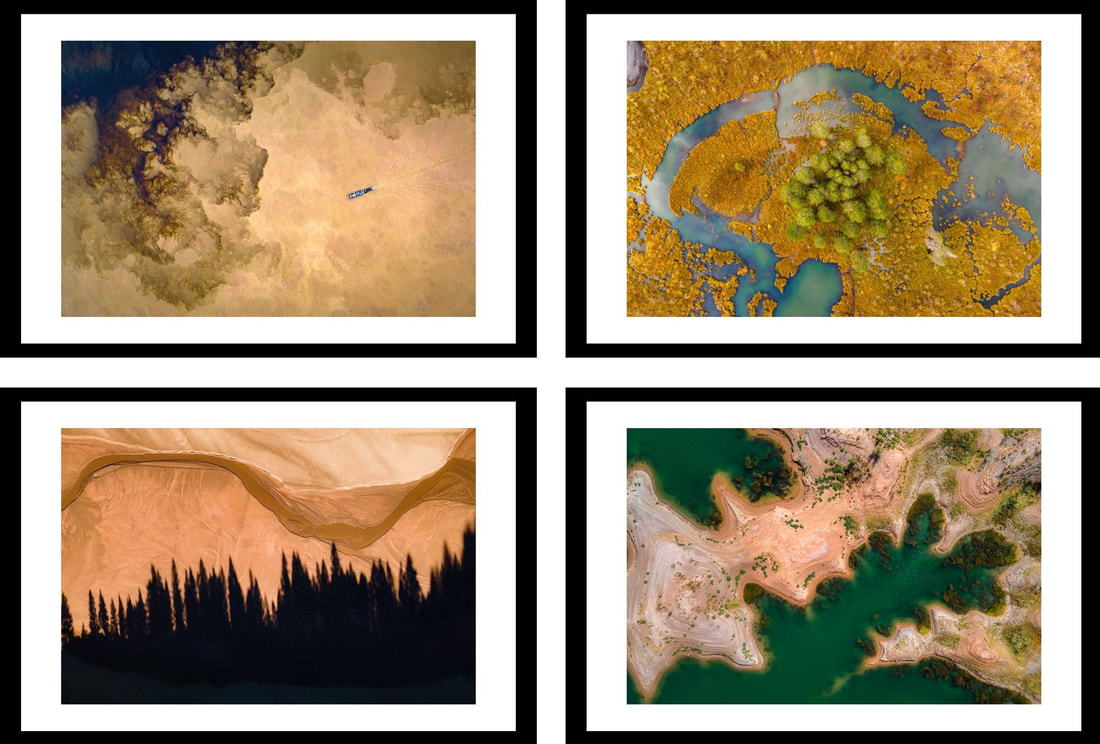
This installation was a part of SKY, a show dedicated to climate change and environmental impact at The Drawingroom Gallery in San Francisco. The piece comprised 4 aerial overhead shots showing the phases and effects of sediment transportation by rivers, and the ways that humans have altered this essential process with dams.  
Picture
Picture
Data Streams
StoryMap and Lesson | November 2022
This collaboration between the K-12 Education team and the Earth and Environmental Sciences Area at Berkeley Lab explains how engineers and river scientists are collaborating on networked sensors to study mountain watersheds like never before.


Go to the storymap
Watch the release event
The Quest for Liquid Sunlight
StoryMap and Event | August 2022
This educational project was produced to accompany a live event at the Bay Area Science Festival in 2022, and designed to teach high school students about Berkeley Lab's research on creating liquid carbon-based fuels out of sunlight. 


Go to the StoryMap
Watch the BASF event

Rocky Mountain Water 
StoryMap and Journal Covers | December 2020

My internship project with the Watershed Function group at Berkeley Lab told the stories of Natural, Impacted, and Managed water in the Rockies and the American West. 
Go to the Storymap

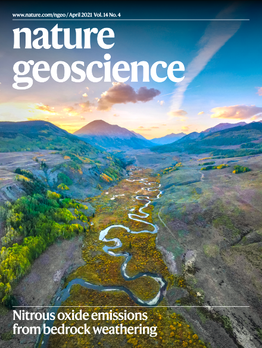
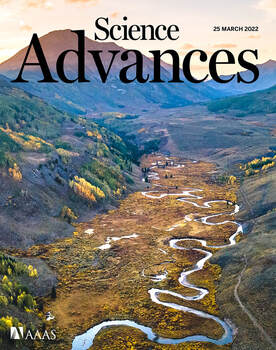
My photography from this project was also selected for the April 2021 cover of Nature Geoscience and March 2022 cover of Science Advances
The cover of the academic journal Nature Geoscience, bearing my aerial image of a meandering river in the Colorado Rockies

Published Writing + Photography


The little mountain rivers that create the Amazon might soon be choked off

My first publication with Massive Science explores how river processes in the Andes are vital to building the Amazon rainforest downstream, and what might happen if Andean rivers are dammed.
Read on Massive

The Watson Fellowship

I spent much of 2019-2020 on a Thomas J. Watson Fellowship, traveling the length of the Amazon River and using photography to showcase the science of river systems. 
This project was put on hold for the pandemic, with the exception of a foray along the Colorado River in October 2021. I chronicled my journey through photos and writing on the project webpage:
Go to The Watson
El alma del Río Marañón
StoryMap (in Spanish) | November 2019
This collaboration with Wildlife Conservation Society Peru and the Kukama indigenous people of the Peruvian Amazon uses GIS mapping to digitize the oral history of the Marañon River and advocate for its protection from proposed dredging


Read the storymap (in Spanish)

At the Smithsonian

The Smithsonian Museum of Natural History featured my writing and photography work as part of my internship in 2018. Here are a few instagram posts showcasing how I used photos to highlight fascinating facts and specimens that I encountered during my time as an intern.
View this post on Instagram

This remarkable skeleton has more in common with a wine glass than it does with human bones. That's because the creature that made it—a glass sponge (Euplectella aspergillum)—is siliceous. That is, it makes its hard parts out of silica, the same molecular building block of glass and quartz. While many marine organisms build their shells and skeletons using calcium, the cells of this sponge secrete tiny silica-based structures called spicules. The spicules, shown under a microscope in the second image, coalesce into stunning and complex geometric shapes that serve as a skeleton and provide support for the sponge’s soft body parts. These siliceous structures also protect the sponge from predators—who would want a mouthful of prickly spicules? You can find this #HiddenWonder in our Sant Ocean Hall! What is your favorite hidden wonder?

A post shared by Smithsonian's NMNH (@smithsoniannmnh) on Jun 12, 2018 at 11:31am PDT

View this post on Instagram

These remarkable marine arthropods are called “sea spiders” or pycnogonids. Incredibly, these animals don’t have a specialized respiratory system! Instead, their long skinny legs give them a large surface area to absorb oxygen from the water.

A post shared by Smithsonian's NMNH (@smithsoniannmnh) on Sep 26, 2018 at 9:10am PDT

View this post on Instagram

Tape worms, like this beef tapeworm (Taenia saginata), are intestinal parasites with a remarkable body plan: they have no mouth and no digestive system. Instead they absorb nutrients straight through their outer surface! The front of the worm is where the organism grows new segments. Each segment, called a proglottid, contains both male and female reproductive machinery to make fertilized eggs. These proglottids make up the vast majority of the worm’s body. Ultimately, gravid proglottids bearing eggs drop off into the host’s feces, looking like small segments of tape (thus the name) to be consumed by and infect the next host.

A post shared by Smithsonian's NMNH (@smithsoniannmnh) on Sep 17, 2019 at 9:57am PDT

View this post on Instagram

Unlike many bugs, spiders often need to be preserved in ethanol or other fluid to prevent them from drying and shriveling. One reason that the fluids inside spiders are important is that they have hydraulic joints! Spiders lack leg extender muscles, so they use fluid pressure to stick out their legs, which extend to accommodate more liquid. When spiders die this fluid can evaporate, causing all of their legs to pull inward if they’re not preserved in liquid.

A post shared by Smithsonian's NMNH (@smithsoniannmnh) on Dec 1, 2018 at 7:24am PST


View this post on Instagram

George Washington University Hospital had an unusual patient last week—a 150-pound fossil Edmontosaurus skull. When this duck-billed dinosaur was alive some 68 million years ago, it would have measured about 40 feet long and weighed more than 8,000 pounds! Our paleontologists brought the fossil skull to GWU hospital for a CT scan, to help create a 3D model for an interactive display in our new Fossil Hall (opening 2019). Once in the scanning room, it took several attempts to capture it, including putting the skull through the scanner upside down and running the lower jaw separately.

A post shared by Smithsonian's NMNH (@smithsoniannmnh) on Jul 5, 2018 at 7:45am PDT


View this post on Instagram

Chrysotile, known as white asbestos, is one of the most common forms of asbestos used in construction materials. Although asbestos is often associated with insulation and other building materials, the term actually refers to several kinds of minerals known for their shaggy, fibrous appearance. Each one has a unique atomic structure and properties, including high heat resistance and fibrous strength. But the needle-like, microscopic fibers of some of these minerals can penetrate deep into the lungs when inhaled. You can find this #HiddenWonder in our Hall of Geology, Gems, and Minerals.

A post shared by Smithsonian's NMNH (@smithsoniannmnh) on Jun 16, 2018 at 5:21am PDT

View this post on Instagram

Did you know John Steinbeck collected octopuses? In 1940, after the publication of The Grapes of Wrath, the American author participated in an expedition in the Gulf of California with his friend, a marine biologist named Ed Ricketts. Steinbeck’s book, “The Log from the Sea of Cortez,” is an account of the trip. This octopus is one of the specimens they collected and donated to the museum. (Bonus fact: Ricketts was the inspiration for some of Steinbeck’s characters, including “Doc” in Cannery Row!)

A post shared by Smithsonian's NMNH (@smithsoniannmnh) on Aug 25, 2018 at 8:14am PDT


View this post on Instagram

Look at the prominent ridge along the top and sides of this male gorilla skull (Gorilla beringei)! It’s called the sagittal crest, and it serves as an anchor point for a gorilla’s immensely powerful chewing muscles. Like in humans, the muscles responsible for closing a gorilla’s jaw run up the side of their face and anchor on the skull, but the gorilla has a much more substantial attachment and a more powerful bite. Want to feel your own temporalis muscles at work? Put your fingers on your temples the next time you eat!

A post shared by Smithsonian's NMNH (@smithsoniannmnh) on Aug 28, 2018 at 8:02am PDT


View this post on Instagram

People usually gaze into crystal balls to glimpse the future. But in this one, you can see the past! Phantom outlines within crystals like these tell a story. Crystals form when mineral-rich water sits in a crack or cavity for a long time, allowing atoms dissolved in the liquid to solidify and come together in regular repeating patterns. But their growth isn't always continuous. The conditions for crystallization can start and stop several times over the course of their growth. If the crystals stop growing, tiny bubbles of mineral grains can accumulate on their surfaces. Then, if growth resumes, it can entomb the marks of the old surface within the crystal. You can find these #HiddenWonders in our Hall of Geology, Gems, and Minerals.

A post shared by Smithsonian's NMNH (@smithsoniannmnh) on Jun 14, 2018 at 7:46am PDT

StoryMap: A Cultural Map of the Rio Marañon
January 2020

The Kukama people are an indigenous group in the Peruvian Amazon, whose culture and history is closely intertwined with the Marañon river on which they live. Their oral history of the river contains a rich store of cultural knowledge, as well as an important history of the trauma and violence inflicted when European rubber barons enslaved and exploited indigenous people to harvest latex. As part of my Watson project, I joined the Wildlife Conservation Society and local organizers from Radio Ucamara in collecting material for a cultural map to record the locations of historic events and cultural myths along the Marañon. From these maps and the photos, we created a ArcGIS story map to present and share these stories.
Check out the story map (in spanish)
Photos on this website are the property of Jeremy Snyder and cannot be reproduced or reused without permission.

Sign up for my newsletter

​Want to stay in the loop about my projects and photography? Follow along for photo essays, blog posts, and updates.
Sign up here
  • Home
  • Portfolio
  • Shop
  • Contact
  • Blog